On Comfort Food and Interference
Mostly potatoes. Something else entirely.
We always have potatoes in our kitchen.
Not because we plan meals around them, but because that’s how my family kitchen in London works. A bag pushed to the back of the cupboard. A few loose ones left in a bowl on the counter. Potatoes are what you reach for when you’re tired, when you don’t want to think too hard, when you need something that will be eaten without negotiation.
My children love quick snacks, especially 감자 당근채 볶음 , potato and carrot cut into fine matchsticks, stir fried quickly, lightly seasoned, eaten straight from the pan. It isn’t special food, and it isn’t written down anywhere. It’s the kind of dish Korean mothers make by feel, because it’s reliable and no one complains.
That’s how potatoes live in my kitchen: dependable, soft, forgiving.
They show up quietly. In soups. In stews. In small dishes made without much thought. They aren’t dramatic, but they hold things together.
Potatoes don’t compete. They carry flavour instead. Salt, fat, heat, time.They take it all in and give back something calm.
That’s why they travel so easily. Across kitchens. Across cultures. Across moods.
Some of the best food is the kind you barely notice at first until you realise the table has gone quiet and everyone is still eating.
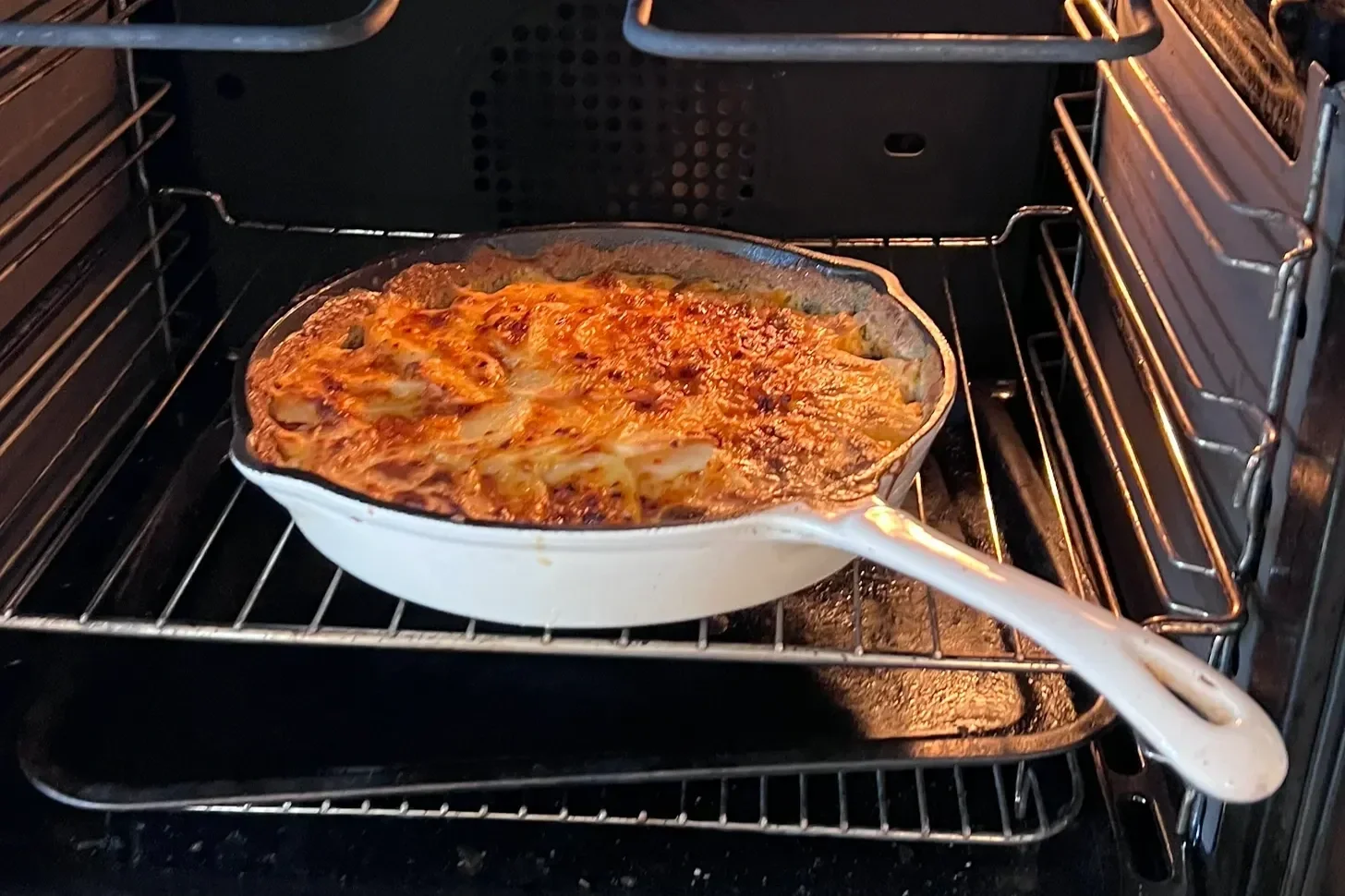
This gratin came from the same instinct.
Potatoes first. Always potatoes.
The kimchi came later, almost accidentally, used with restraint the way I might use anchovy or garlic. Not to dominate, but to wake everything up.
Just a small amount of mid fermented kimchi sharpens the cream, lifts the potatoes, and gives the dish depth without noise. You don’t taste kimchi straight away. What you notice first is warmth and comfort, followed by a gentle edge that makes you go back for another bite.
It’s still a potato dish.
It’s still family food.
It just speaks in a slightly wider language.
Mostly potatoes, quietly transformed.
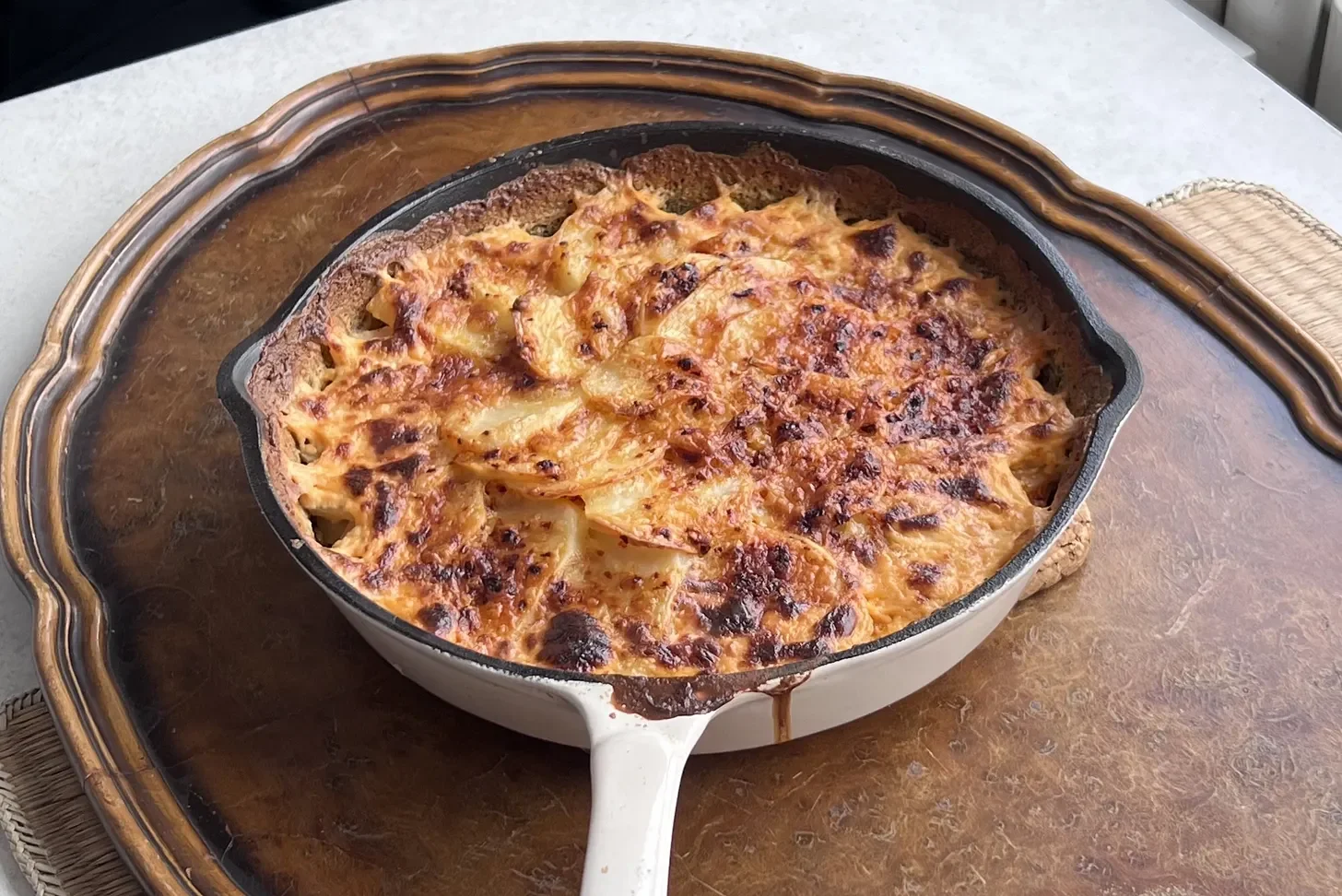
Kimchi & Potato Gratin
Serves: 4- 5
Best kimchi: 2 -3 weeks old (gentle tang, some crunch)
Ingredients
750 g waxy potatoes (Charlotte, Nicola, Anya), peeled and thinly sliced (2-3 mm)
75 g mid fermented napa kimchi, chopped and lightly squeezed
250 ml single cream (or oat cream)
2 garlic clove, finely minced
60 g mature cheddar or Gruyère, grated
(plus a little extra for the top, if you like)2 tsp gochugaru (optional)
Sea salt and freshly ground black pepper
A very light drizzle of toasted sesame oil, to finish (optional)
Dish: about 1.5 litres (roughly 23 × 18 cm)
Method
1. Heat the oven
Preheat to 180°C (160°C fan). Lightly grease your baking dish.
2. Season the cream
Mix the cream with the garlic, a small pinch of salt, and black pepper.
Go gently - the kimchi and cheese will do more work than you think.
3. Slice the potatoes
Slice evenly (2-3 mm). Don’t rinse them; surface starch helps the gratin hold together.
4. First potato layer
Arrange two-thirds of the potatoes in overlapping layers. Season very lightly.
5. Kimchi layer
Scatter the kimchi thinly and evenly over the potatoes. Spoon over 2-3 tablespoons of cream - just enough to soften it.
6. Finish with potatoes
Layer the remaining potatoes on top. Pour over the rest of the cream, tilting the dish so it settles between the layers. Add the grated cheese, gochugaru if using, and the panko for crunch if you like.
7. Bake gently
Cover loosely with foil and bake for 30 minutes.
Uncover and bake for another 25-30 minutes, until bubbling at the edges and deeply golden on top. A knife should slide through without resistance.
8. Rest & serve
Rest for 10 minutes before serving. Finish with a very light drizzle of toastede sesame oil - it should whisper, not announce itself.
Notes from Kimmy
This dish is potato led; the kimchi should feel woven in, not layered.
Squeeze the kimchi lightly - flavour matters more than moisture.
Mid fermented kimchi works best. If yours is older, use less.
Resting matters. The gratin settles and improves as it cools slightly.
How I eat it
With a sharp green salad.
With roast chicken or mushrooms.
Or alone, reheated the next day, when the potatoes have absorbed everything and the flavours feel more settled, more complete.
Sometimes the best kimchi dishes aren’t the loud ones.They’re the ones where something familiar tastes deeper, steadier, and quietly finished.
