Why Kimchi Is Never Just One Thing
Pa kimchi is one of many kimchi traditions, shaped by season, place, and memory.
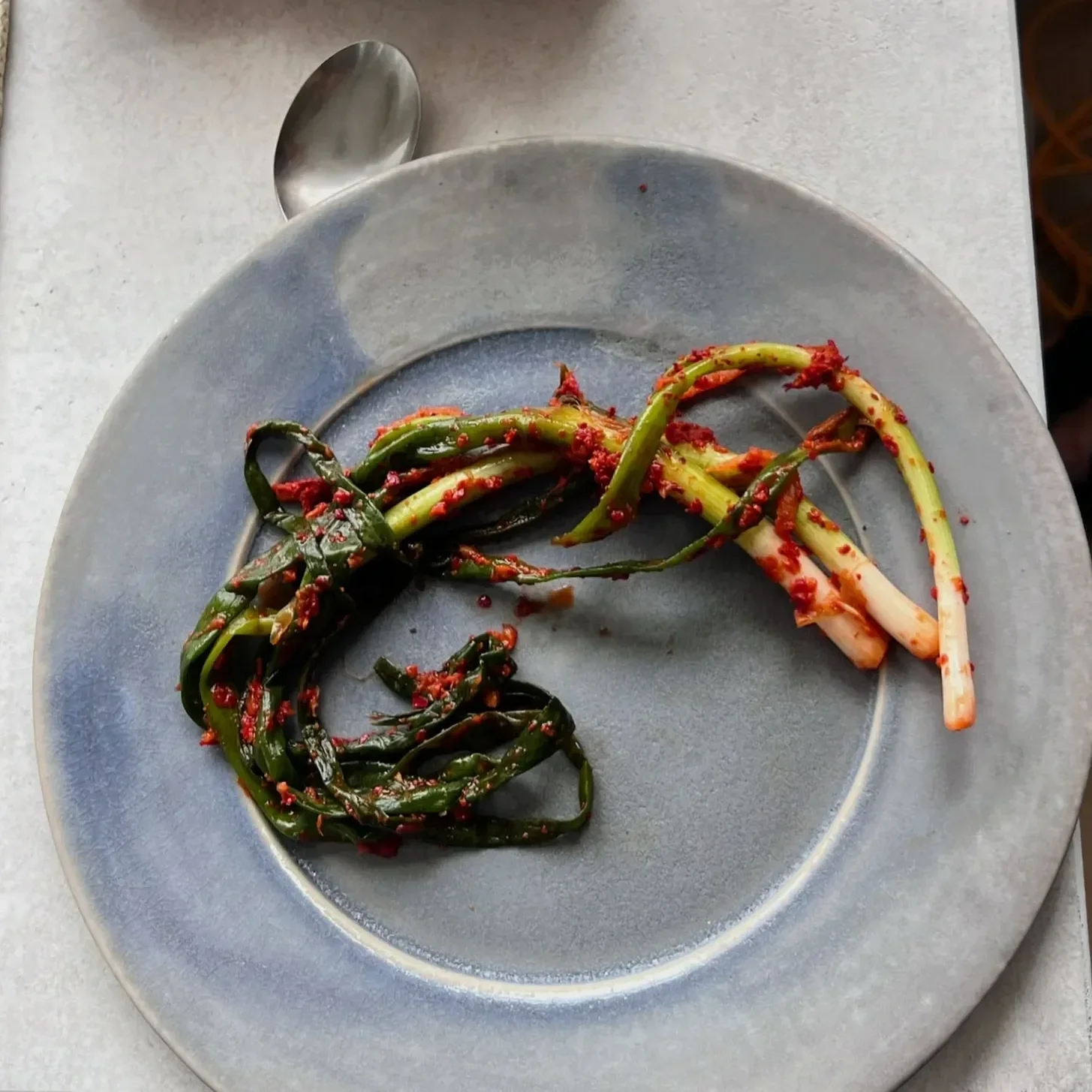
Pa kimchi is one of the most assertive, aromatic styles of Korean kimchi I know. It’s traditionally made with jjokpa - long, slender Korean spring onions that carry sweetness, heat, and a penetrating onion perfume from root to tip. Unlike napa cabbage kimchi, which is built on layers and crunch, pa kimchi is about line and saturation. Each onion stands on its own, fully coated in seasoning, absorbing flavour along its entire length.
When pa kimchi is freshly made, there is no subtlety to it. The raw onion heat arrives - first sharp, grassy, almost shocking followed by the smoky warmth of gochugaru and the savoury depth of garlic, ginger, and fish sauce. At this stage, the flavour feels almost electric. It demands attention.
But fermentation moves quickly here. Within 24 to 36 hours, the onions begin to soften. The fibres relax. The heat mellows. What was once aggressive becomes rounded and savoury still pungent, but far more composed. Pa kimchi teaches an important lesson early on: not all kimchi wants to wait.
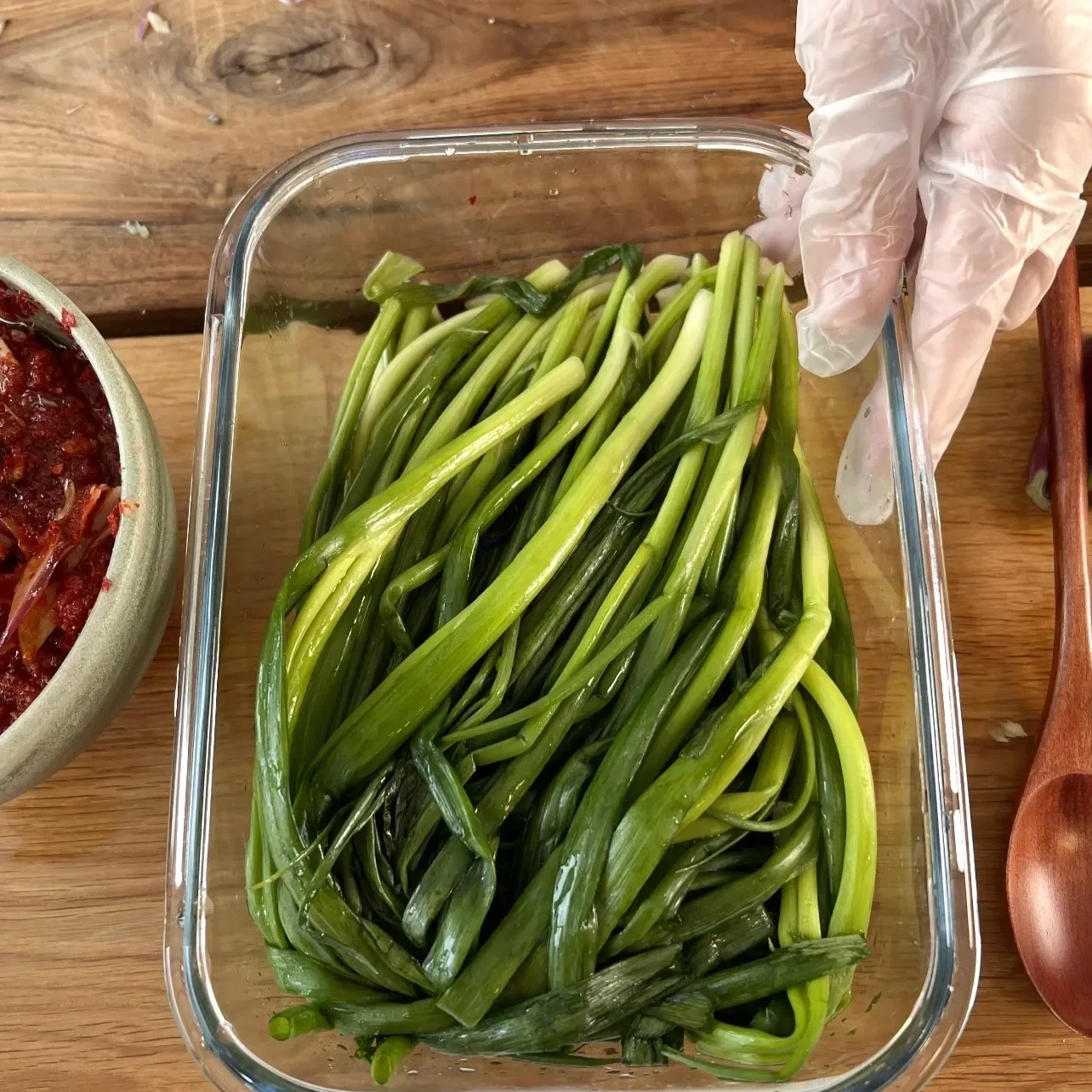
Because spring onions are thin and relatively low in water compared to cabbage, pa kimchi ferments fast and it turns sour fast, too. This is not a kimchi you make and forget. It needs to be tasted daily, watched closely, and refrigerated as soon as it reaches that bright, lively tang. Left too long at room temperature, it can tip from invigorating to overwhelming. At its best, pa kimchi balances bite with depth intense, but never harsh.
Living and cooking in the UK has changed the way I think about pa kimchi. Imported jjokpa isn’t always easy to find, and over time I’ve learned that the method matters more than the exact vegetable. If you grow your own food, young leek plants pulled early while still slim and tender can work beautifully. At this stage, young leeks share the fibrous structure and sweetness of spring onions, but with a gentler, rounder onion flavour. I look for young leeks no thicker than a pencil. I trim the roots, split slightly thicker stems lengthwise, and treat them exactly as I would jjokpa. They ferment quickly, soften beautifully, and develop a deep savoury sweetness that feels completely at home in a British kitchen. This kind of adaptation isn’t compromise. It’s continuity. It’s what happens when a tradition learns to live in new soil.
Pa kimchi is most often eaten with grilled meats, especially samgyeopsal, where its acidity and onion heat cut straight through fat and smoke. It’s equally good alongside rich soups and stews, or simply chopped into shorter lengths and eaten with hot rice. In many Korean homes, it’s snipped at the table with kitchen scissors - small, practical gesture that keeps the onions intact until the moment they’re eaten.
More than anything, pa kimchi reminds me that kimchi is not a single dish. It’s a way of thinking. Each vegetable has its own rhythm, its own fermentation speed, its own point of balance. The job of the kimchi maker isn’t to force uniformity, but to recognise those differences and work with them.
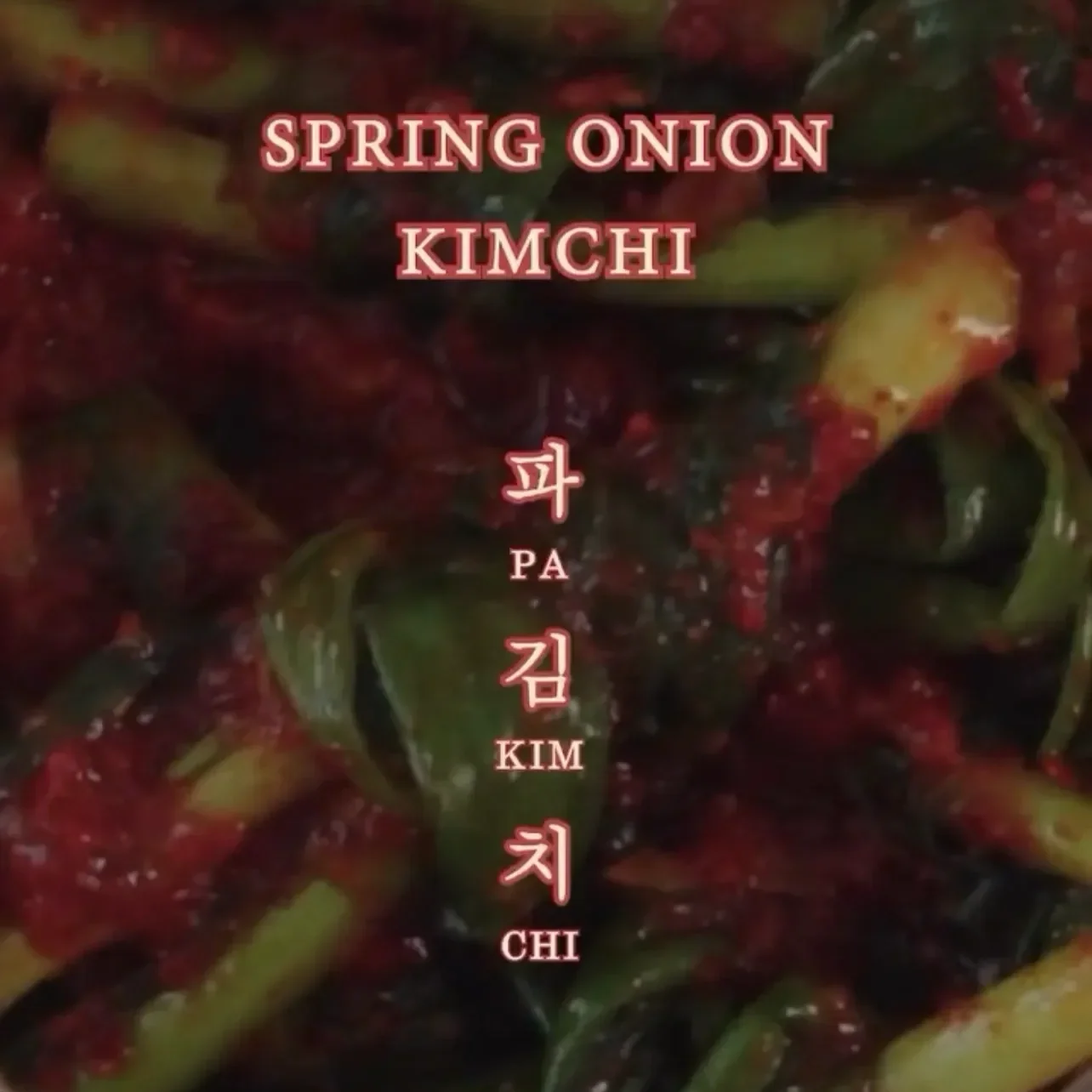
Pa Kimchi (Spring Onion Kimchi)
Spring onion kimchi, known as pa kimchi, is one of the most direct and expressive forms of kimchi. It’s fast to make, quick to ferment, and unapologetically bold. Where cabbage kimchi builds flavour slowly through layers, pa kimchi delivers intensity straight away sharp, aromatic, and deeply savoury.
This is a kimchi that rewards attention rather than waiting. You can eat it immediately, or let it ferment briefly for a deeper, rounder flavour.
Ingredients
500g spring onions
8 tbsp Korean red pepper flakes - (gochugaru)
5 tbsp (75 ml) anchovy fish sauce
3 tbsp garlic, grated
2 tsp ginger, grated
Optional (non-traditional but excellent):
A small piece of kohlrabi, finely sliced
Method
Wash the spring onions thoroughly in several changes of cold water. Drain well, then trim off the roots and any yellowed or tough ends. Keep the onions whole.
Place the spring onions in a large dish. Starting at the white ends, pour the fish sauce over them, gently turning to coat. Leave for about 30 minutes, or until the onions begin to soften and wilt slightly. Pour off the excess fish sauce and set it aside.
If using kohlrabi, slice it thinly and set aside. While not traditional, it adds a clean crunch and gentle sweetness that works beautifully with the sharpness of pa kimchi.
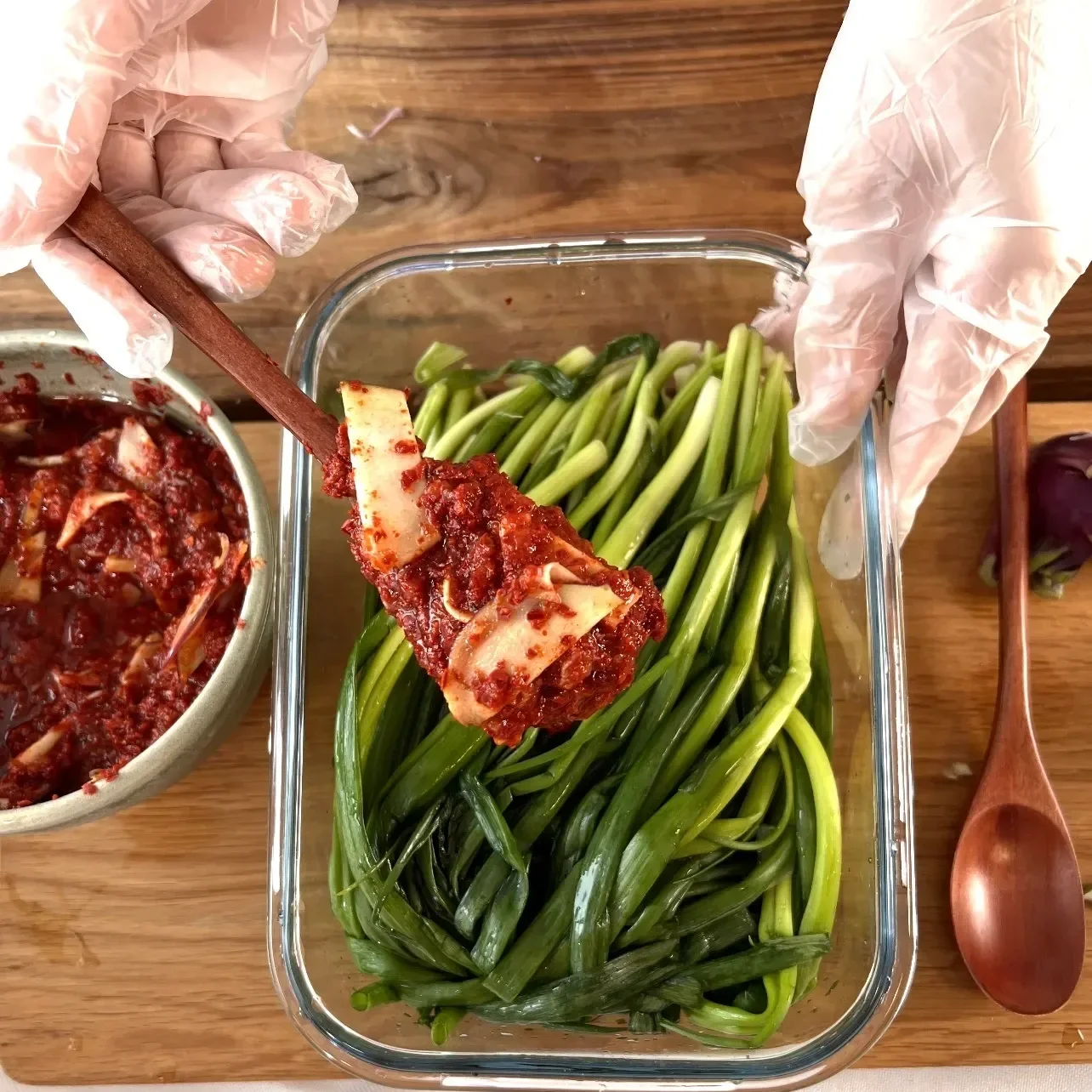
Using a mortar and pestle, crush the garlic and ginger into a smooth paste. Add the gochugaru, a little of the reserved fish sauce, and the sliced kohlrabi if using. Mix well to form a thick, vivid paste. Add the paste to the spring onions. Using your hands, gently but thoroughly coat each onion from base to tip, taking care not to break them.
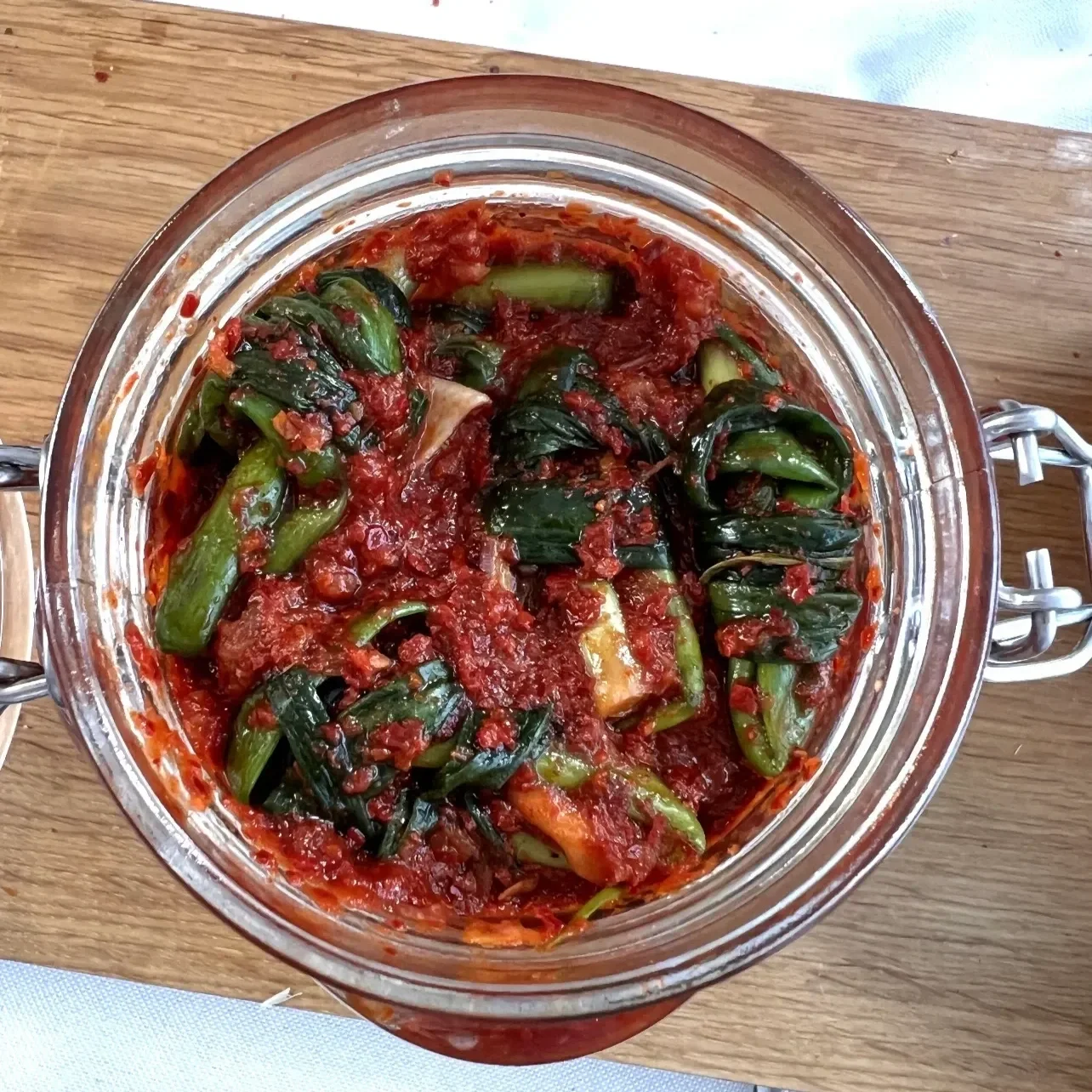
Transfer everything to a clean glass jar or airtight container. Press down firmly to remove air pockets and ensure the onions are well packed.
You can eat pa kimchi straight away, when it is fresh, sharp, and lively, or leave it to ferment briefly before refrigerating.
Vegan Version
To make pa kimchi vegan, replace the anchovy fish sauce with kelp water and add ½ teaspoon fine sea salt. Increase the garlic and ginger slightly for depth.
This version ferments just as well, with a cleaner, lighter savouriness that lets the spring onions take centre stage.
Fermentation Timing Guide (Short + Practical)
Pa kimchi ferments quickly. Thin vegetables move fast.
Day 0 (Fresh): Sharp, grassy, fiery. Eat immediately if you like intensity.
Day 1–2 (Room temperature): Softer fibres, rounded heat, light tang.
After refrigeration: Flavour deepens slowly; best within 7–14 days.
Taste daily. Pa kimchi does not reward neglect. It’s best moment is bright, savoury, and alive.
How to Eat Pa Kimchi
Pa kimchi is traditionally served with grilled meats, especially samgyeopsal, where its acidity cuts through fat and smoke. It’s equally good with rich soups and stews, or chopped into shorter lengths and eaten simply with hot rice.
In many Korean homes, it’s snipped at the table with kitchen scissors a practical gesture that keeps the onions intact until the moment they’re eaten.
If this kimchi feels fast, that’s because it is.
Pa kimchi is a perfect example of why some kimchi ferments faster than others thin structure, low water content, and open fibres mean fermentation moves quickly and decisively.
