So What Is Kimchi, Really? A Korean Answer.
Clearing up the myths behind the world’s most misunderstood ferment.
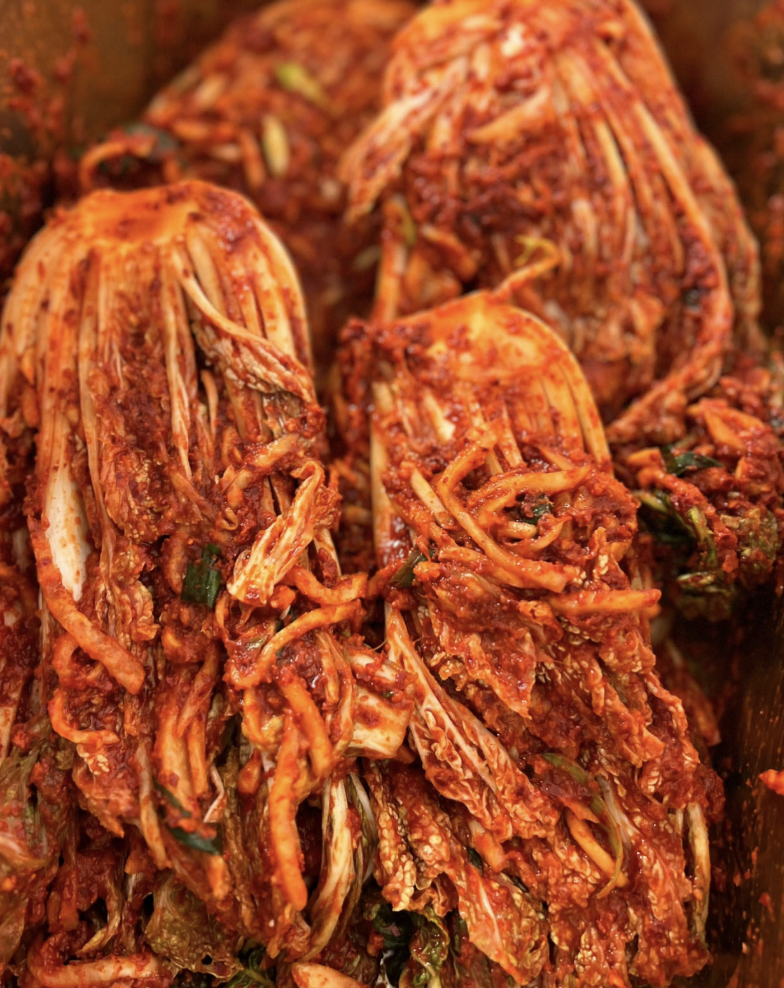
So What Is Kimchi, Exactly?
Kimchi is Korea’s national dish. For Koreans, this isn’t an exaggeration but a simple truth. Kimchi permeates daily life: it appears at every meal, from the most ordinary breakfast of rice and soup to the most elaborate feast prepared for ancestral rites. It lives in our fridges, fills our markets, and even colours our language. When Koreans smile for a photo, we say kimchi instead of cheese. It is everywhere and it is us.
At its most basic, kimchi means vegetables that are salted, seasoned, and left to ferment. That definition is technically correct, but it misses the essence. Kimchi is not merely fermented vegetables. It is a method of preservation born from necessity and perfected over centuries; a craft of balance between salt and water, spice and patience. It is the food that carried us through harsh winters and poverty, and the food that now represents Korea to the world.
Diversity and Adaptation
Today, the most recognisable version is baechu kimchi, made from napa cabbage. Its image bright red, pungent, stacked in jars has become synonymous with the word kimchi. Yet this fiery red hue is relatively recent. Chilli peppers arrived in Korea in the late 16th century, and only over time did gochugaru become central to kimchi, fully taking hold by the late Joseon dynasty. Before then, kimchi was pale, often seasoned only with salt, garlic, and herbs.
But cabbage kimchi as we know it today is just one member of a vast family. There are hundreds of types shaped by season, region, and pantry. Some are pale and refreshing, others fiery and dense; some soupy and mild, others aged until their depth turns almost smoky. Every household has its own way; every cook their own hand. Yet all share the same soul: kimchi as a living expression of memory and community.
Across Korea, geography shaped flavour. In the colder northern provinces, kimchi tends to be lighter in seasoning and often less spicy, while in the warmer south, kimchi is richer, wetter, and more heavily flavoured with seafood pastes. Some homes favoured the cooling, clear broth of dongchimi, while others relied on thick, fiery cabbage kimchi to carry the family through winter. This adaptability is not a weakness, but a strength. Kimchi shifts according to place and time, yet never loses its essence.
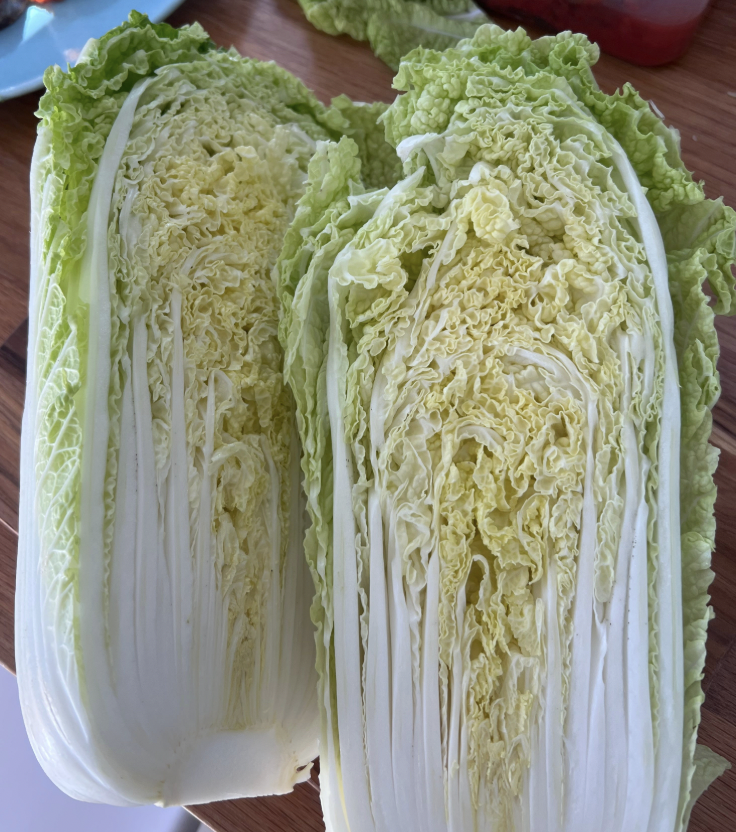
The Craft and the Soul
For me, kimchi has always been storytelling in edible form. I remember my mother carrying containers out to the balcony, peering inside with both duty and tenderness. I remember the crisp bite of geotjeori in spring and the deep tang of aged kimchi simmered into stews during winter. Years later, in London, I opened my own jars and felt the same transformation unfolding thousands of miles away that proof that memory can live inside food.
The fizz of a well-fermented kimchi is more than flavour; it is a reminder that transformation takes time. You cannot force cabbage into sourness overnight. Nature needs its rhythm, and our role is simply to create the right conditions and wait. Kimchi is patient food, and it teaches patience in return.
This is why kimchi cannot be reduced to a formula like:
“vegetables + chili powder + garlic + ginger + salt at 2–3% of vegetable weight = kimchi.”
That recipe, repeated often in Western fermentation books, will indeed yield fermented vegetables but not kimchi. The craft lies in the sequence:
salting to draw out water and firm texture
rinsing and draining to balance salinity
preparing a seasoning paste that layers aromatics and spice
coating each leaf or piece with intention
packing tightly so fermentation can unfold evenly
Each step carries meaning. Remove the sequence, and you remove the soul.
What Kimchi Is Not
Kimchi is not a free for all of shortcuts. Adding Japanese miso, soy sauce, gochujang, or generic chili powder does not make kimchi. These ingredients belong to their own proud traditions, but in kimchi they alter flavour, texture, salt balance, and microbial activity that creating something more like a miso-pickle or jang-style fermentthan true kimchi.
Soy sauce may appear in a few regional or vegan adaptations, but it has never been central to traditional kimchi. Gochujang, already a fermented paste, brings sugars and enzymes that shift the process away from kimchi fermentation entirely.
Some Western recipes mix miso with gochugaru and call it “kimchi.” The mixture will ferment, but it is not the kimchi Koreans remember, nor the kimchi evoked when we say kimchi with affection, nostalgia, and pride.
“Kimchi is not cabbage mixed with miso, soy sauce, gochujang, or generic chili powder.
Kimchi is cabbage transformed through salt, gochugaru, garlic, ginger, jeotgal, and time.” ( For vegan kimchi - without Jeotgal)
To make kimchi properly is to respect a rhythm refined over centuries. When shortcuts replace intention, the essence is lost.
The Living Process
Kimchi is a living, lactic acid–driven fermentation that balances salt, spice, umami, and time. It is not defined by any one ingredient, nor is it interchangeable with other fermented pastes. To keep kimchi’s soul intact, we must let vegetables, salt, and microbes work together in their own rhythm.
That is what transforms cabbage into something more than itself: crisp, tangy, effervescent, deeply Korean.
Anything else may be delicious but it is not kimchi.
